
How to Choose Vintage Barware for Mocktails
Last Updated: October 28, 2026
Quick Summary
Choose vintage barware by matching the glass shape to the drink, since each shape controls how fast ice melts, how long fizz lasts, and how the garnish shows. Coupes suit spritzes and sparkling juices, rocks glasses suit muddled drinks, and highballs suit long, fizzy mixers. Start with a matching set, then add one shaker and a serving tray.
- Coupes and flutes suit spritz-style and sparkling drinks because they show garnish well.
- Use a highball or Collins when a mocktail is more than half mixer.
- Hand-wash vintage glassware; the dishwasher strips decoration and can weaken older glass.
- Check each rim by running a fingertip around it, since a felt chip can cut a lip.
- Buy sets over singles when you plan to entertain, since matching pieces look more intentional.
Table of Contents
- Why Vintage Barware Works for Mocktails
- Matching Vintage Cocktail Glasses to Your Mocktail Recipes
- Building a Practical Vintage Mocktail Set
- Styling a Vintage Bar Cart for Alcohol-Free Drinks
- Sourcing, Evaluating, and Caring for Vintage Glassware
- Which Vintage Pieces to Add to Your Bar Next
- Frequently Asked Questions
Vintage barware has a way of changing the mood of a room before a single drink is poured. A mismatched set of 1960s glasses on a wooden bar cart signals that someone thought about the evening. That effect matters just as much for mocktails as it does for cocktails.
Choosing the right pieces, though, is harder than it looks. Glassware shapes, sizes, and finishes all affect how a drink tastes and how it feels in the hand.
Why Vintage Barware Works for Mocktails
Vintage pieces were designed for entertaining, not for a single purpose. Many mid-century designs were built for generous pours of juice, soda, and fruit-forward drinks, which suits mocktails well. The shapes also photograph beautifully, which matters if you share your home bar online.
A sparkling drink in a coupe or a muddled fruit drink in a heavy rocks glass can make an alcohol-free drink feel like a considered choice.
Matching Vintage Cocktail Glasses to Your Mocktail Recipes
Start with the drink, then pick the glass. The single most useful habit you can build is matching shape to drink, because in a mocktail the glass is doing work that alcohol normally does: it controls how fast ice melts, how long carbonation lasts, how concentrated the first sip feels, and how much of the garnish the drinker actually sees.
Here is how the main vintage shapes map to alcohol-free drink styles.
Coupes and Cordials for Spritzes and Sparkling Drinks
Coupes and cordials work well for spritz-style drinks, sparkling juices, and anything served chilled and up. The wide bowl keeps garnishes visible, and the stem keeps warmth from the hand away from the drink.
A few mechanics worth knowing:
- Carbonation. A wide, shallow bowl gives bubbles more surface area to escape, so a coupe is best for drinks you finish in ten to fifteen minutes. For a long, slow sipper, a taller flute or a narrow highball holds fizz noticeably longer.
- Temperature. A stemmed glass keeps your hand off the bowl, which slows warming. That matters more in a mocktail than in a cocktail, because there is no spirit to mask a drink that has gone lukewarm and flat.
- Garnish scale. Coupes show off a floated citrus wheel, a single berry, or a sprig of mint. Keep garnishes small enough that they do not crowd the rim.
Cordials are smaller and suit concentrated flavors, such as a reduced ginger syrup served in a small pour, or a tasting-sized shrub. Keep them for small portions rather than full servings; a 2 to 3 oz cordial is a tasting glass, not a highball.
Rocks Glasses for Muddled and Spirit-Free Drinks
Rocks glasses are sturdy and wide-mouthed, which makes them practical for muddled drinks where you crush mint, citrus, or berries directly in the glass. Their weight also makes them stable on a bar cart, and the wide opening gives you room to build a drink in the glass rather than in a shaker.
The trade-off is dilution. A wide rocks glass with a single large cube melts slowly and keeps a drink strong and cold; the same glass with crushed ice dilutes fast, which is why tiki-style and swizzle-style mocktails are built over crushed ice and served immediately. Match your ice to your intent:
- One large cube for a spirit-free Old Fashioned or a stirred, syrup-forward drink you want to sip slowly.
- Crushed or pebble ice for a tropical, muddled, or swizzled drink where dilution is part of the design.
The Vintage Tiki Mid Century Modern Whiskey Cocktail Glass - 10 oz ($18.00) is a good example. It holds a 10 oz pour, has a weighted base, and works for an Old Fashioned-style mocktail, a tropical muddled drink, or a simple juice over ice.
Highballs and Collins Glasses for Long, Fizzy Drinks
Tall, narrow glasses suit layered sparkling drinks because they keep bubbles lively and give a long drink room to breathe. A highball is the right home for a mocktail built on tonic, soda, ginger beer, or sparkling water with a citrus or shrub base.
A practical rule: if your mocktail is more than half mixer, reach for a highball or Collins. If it is mostly juice or syrup with a splash of fizz, a coupe or rocks glass will concentrate the flavor better.
Goblets and Wine Glasses for Sangria-Style and Fruit-Forward Drinks
A stemmed goblet or a large wine glass is the right vessel for a spirit-free sangria, a fruit-and-herb cooler, or any drink where the fruit is the point. The wide bowl gives you room to load citrus wheels, berries, and herbs, and the stem keeps the drink cold. These are the glasses that make a batch mocktail look like a party rather than a pitcher.
A Quick Pairing Reference
| Drink style | Best vintage shape | Why |
|---|---|---|
| Spritz, sparkling juice, bellini-style | Coupe or flute | Shows garnish, holds fizz for a short drink |
| Spirit-free Old Fashioned, stirred syrup drink | Rocks glass, large cube | Slow dilution, stable in hand |
| Tropical, muddled, swizzle | Rocks glass or tiki mug, crushed ice | Wide mouth for muddling, fast chill |
| Long fizz, tonic, ginger beer | Highball or Collins | Narrow profile retains carbonation |
| Sangria-style, fruit-forward batch | Goblet or large wine glass | Room for fruit, stem keeps it cold |
| Tasting pour, shrub, reduced syrup | Cordial | Small volume concentrates flavor |
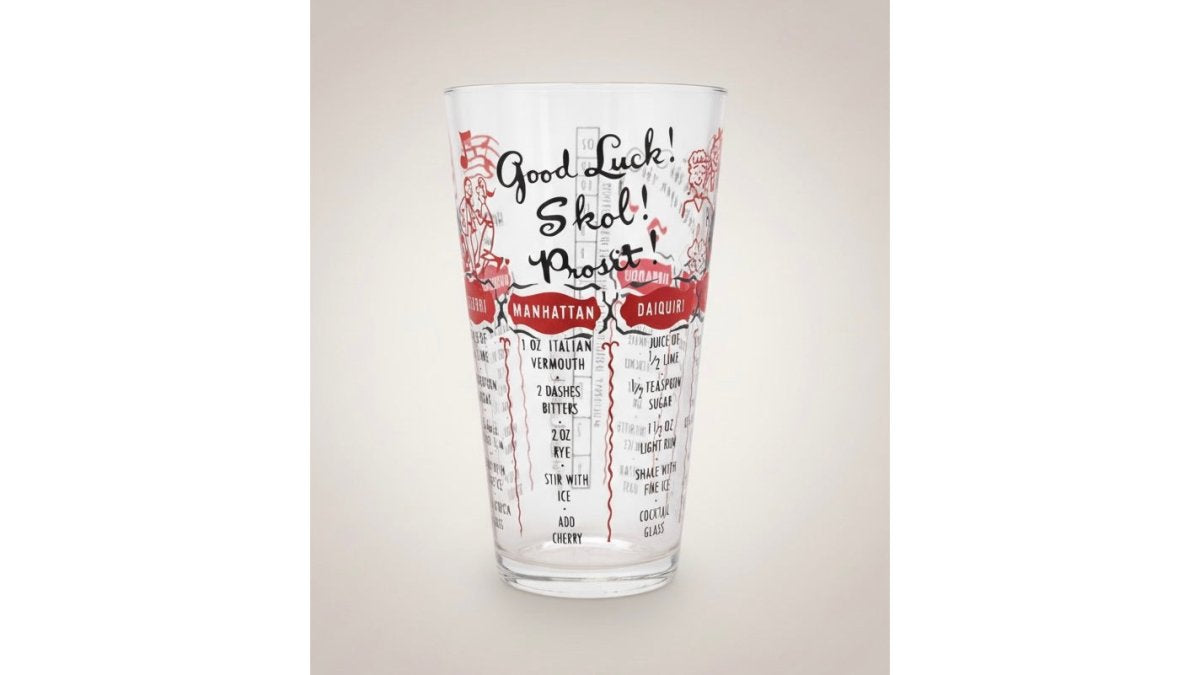
For a versatile starting point, the Vintage Cocktail Recipe Mixing Glass ($25.00) is a practical choice for mixing mocktails from scratch. It is printed with classic recipes and a built-in measuring guide, so you can measure juices and syrups accurately while the glass doubles as a conversation piece.

Building a Practical Vintage Mocktail Set
A small, well-chosen set can be a starting point for home entertaining. A starter kit might include:
- Two to four glasses of one style for consistency, such as rocks or coupes
- One mixing vessel with measurements
- One shaker for juices and syrups
- One serving tray for carrying drinks to guests
Buy in pairs or sets when you can. A single unusual glass can look charming, but a matching set of four makes a table look intentional. If your budget is limited, buy one or two statement pieces and fill the rest with simple, clear glassware.
Vintage Cocktail Recipe Mixing Glass | Retro Barware Mixer Glass with Classic →
The Vintage Silver-Tone Cocktail Shaker with Handle & Pour Spout ($30.00) is a strong centerpiece for this kind of set.

Styling a Vintage Bar Cart for Alcohol-Free Drinks
A bar cart works best when it has one or two anchor pieces and room to breathe. Place a serving tray on the top shelf, group glasses by style rather than scattering them, and keep a small pitcher or shaker within reach. Fresh garnishes in a small bowl add color without clutter.
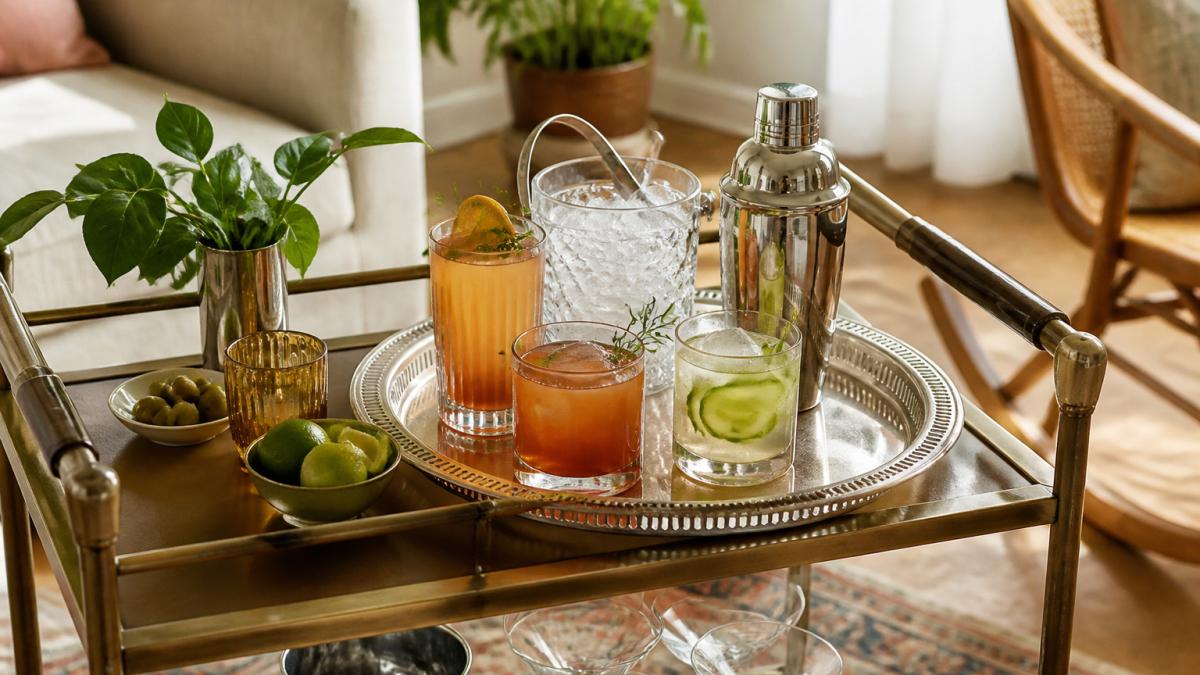
The Vintage Round Silver-Tone Cocktail Serving Tray with Wood Handles ($30.00) suits this setup. Its brushed metal surface and wood handles pair well with mid-century furniture, and its size is generous enough to carry several glasses at once. Check the listed measurements before buying, since some dimensions are noted as approximate.

For more on arranging a cart, see our guide on how to style a vintage bar cart.
Sourcing, Evaluating, and Caring for Vintage Glassware
Most guides stop at "check for chips." For a mocktail enthusiast, the stakes are a little different: you are often serving drinks to guests who are not drinking alcohol, sometimes including pregnant guests or kids, and you are often using older glass that predates modern safety standards. That makes condition and material worth understanding properly.
Evaluating Condition Before You Buy
Check each piece in this order:
- Rim. Run a fingertip slowly around the entire rim. A chip you can feel is a chip that can cut a lip. Reject it, or reserve the glass for display only.
- Base and foot. Look for chips and hairline cracks where the bowl meets the stem or foot, since that is where stress concentrates.
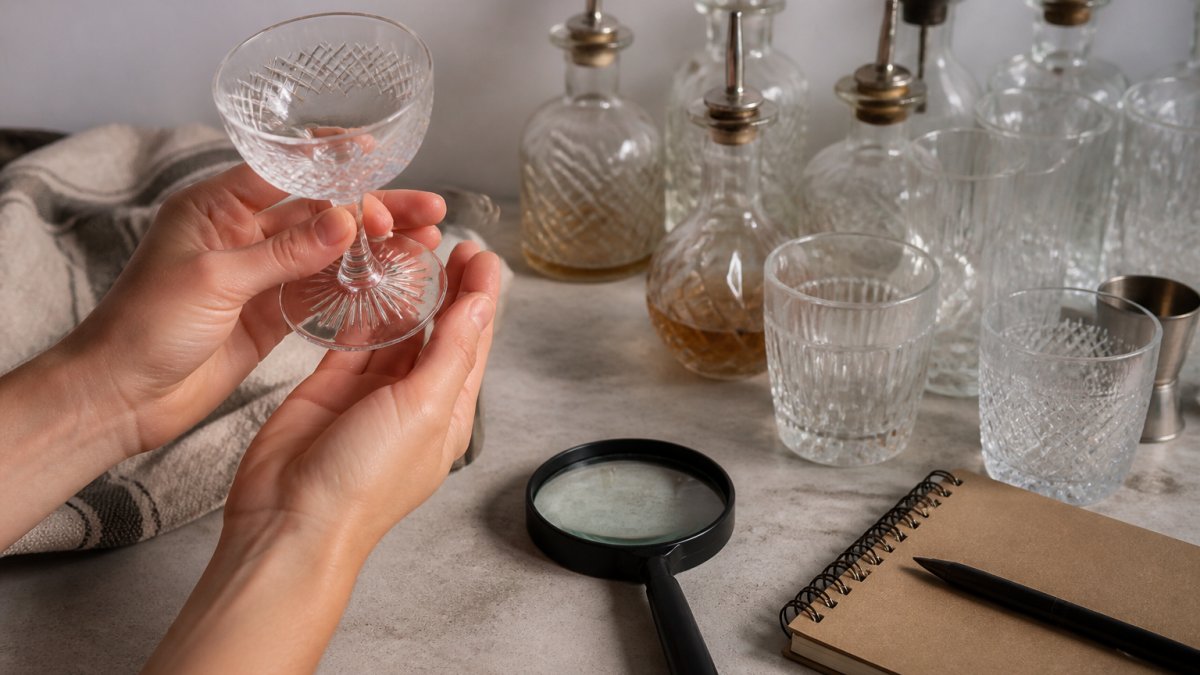
- Hairline fractures. Hold the glass up to a light source and rotate it slowly. Fine cracks show as bright lines that catch the light.
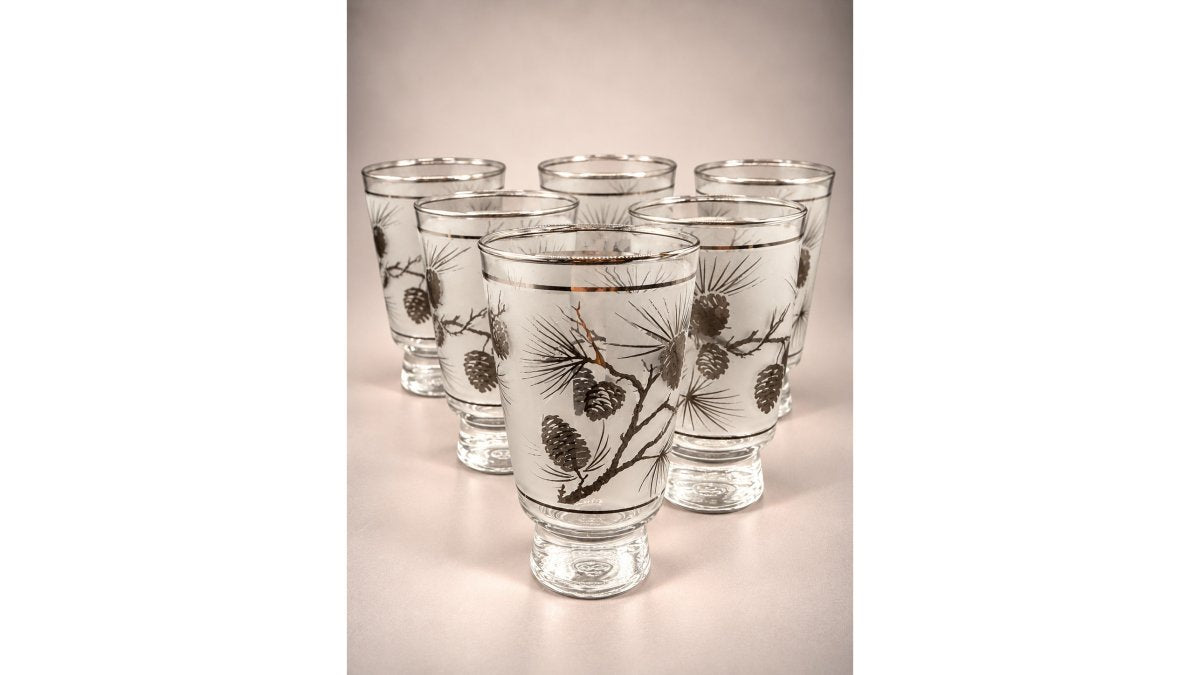
- Etching and decoration. Painted or gold rims on mid-century glass often wear away in the dishwasher. If the decoration is already thin, expect it to disappear with use.
- Metal pieces. Check for flaking plating and dark spotting on the interior. Interior spotting on a shaker or tray often will not clean off and can affect whether the piece is food-safe.
Read product descriptions closely for notes on wear, maker, and era, and ask questions about anything unclear before you pay.
The Lead Crystal Question
Practical guidance:
- Children and pregnant guests. If you are hosting either, favor clear, undecorated glass or modern reproductions for the drinks themselves, and use the vintage pieces as display.
Care That Keeps Old Glass Alive
Hand-wash vintage glass in lukewarm water with mild soap, and avoid sudden temperature changes, such as pouring ice-cold liquid into a warm glass.
Dry thoroughly to prevent water spots, and store glasses upright with a sheet of paper or a soft cloth between them to avoid chipping. Do not stack vintage glasses bowl-to-foot unless you have a shelf liner between each piece; the pressure points are where chips start.
For metal pieces, dry immediately after washing to slow plating wear, and keep them away from acidic mixers for long periods.
Where to Look and What to Pay
Sourcing is part of the hobby. Estate sales, thrift stores, flea markets, and online marketplaces all turn up different inventory, and the best pieces often come in sets because they were originally sold that way. When you buy, prioritize:
- Sets over singles when you plan to entertain, since four matching glasses do more for a table than one rare find.
- Condition over rarity for anything you will actually drink from.
- One statement piece if your budget is limited, then fill in with simple clear glass.
For a deeper look at identifying authentic pieces, see our article on 5 ways to identify authentic vintage barware.
Which Vintage Pieces to Add to Your Bar Next
Start with glassware that fits the drinks you make most often. If you mostly serve sparkling drinks, add coupes. If you muddle fruit and herbs, add sturdy rocks glasses. Then add one shaker or mixing vessel and a serving tray to tie the look together.
Browse Tipsyish's current selection to find pieces that suit your drinks and your space.
Frequently Asked Questions
What vintage glassware works best for mocktails?
The 10 oz [Vintage Tiki Mid Century Modern Whiskey Cocktail Glass](https://www.tipsyish.com/products/vintage-tiki-mid-century-modern-whiskey-cocktail-glass-10-oz) is $18.00 and is listed for whiskey, bourbon, rye, Scotch, an Old Fashioned, a Mai Tai, a tropical cocktail, or a mocktail. It is made of lead-free crystal and has a weighted base.
How do you style a vintage bar cart for alcohol-free drinks?
A round silver-tone serving tray with wood handles is one option for a bar cart. The catalog also includes a vintage cocktail shaker.
How do you clean and care for vintage barware?
Hand wash vintage glass in warm water with mild dish soap, and avoid the dishwasher, since heat and harsh detergents can cloud glass and fade decorative finishes. Dry pieces gently with a soft cloth and store them upright to prevent chipping. Metal shakers and trays with worn plating should be wiped dry after each use to slow further wear. Check rims and bases for chips before serving, and retire any cracked piece, since fine vintage glass can break under stress.
What should you look for when buying vintage glassware?
Read the product description and review the available photos and listed measurements before buying. The tray listing notes that some measurements should be confirmed before purchase.

Comments