
Vintage Glassware Identification Guide: Makers, Marks & Mid-Century Favorites
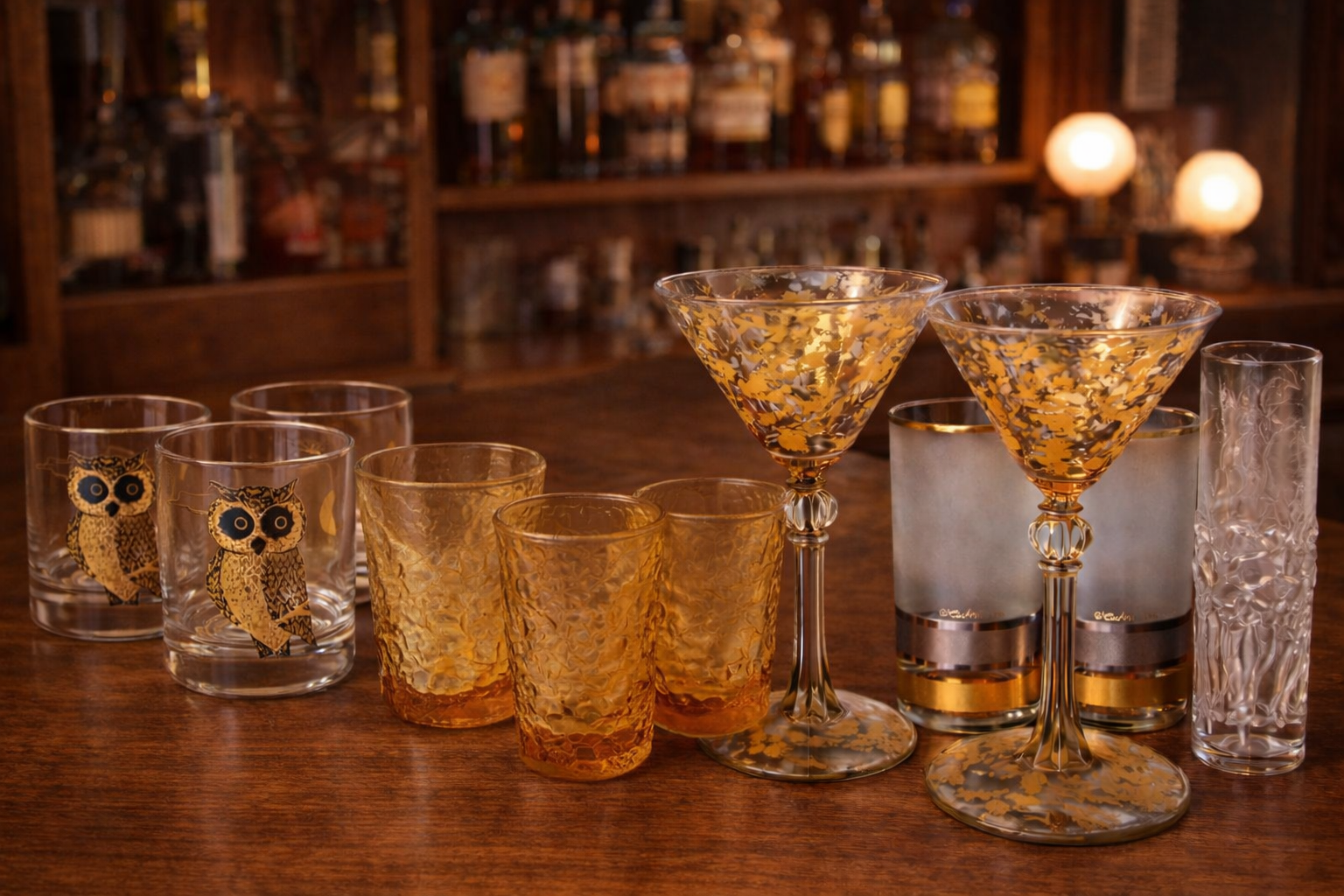
Vintage glassware has become one of the most exciting areas of collecting for cocktail lovers, home entertainers, and design enthusiasts alike. Whether you’re building a retro home bar, searching for unique cocktail glasses, or simply love the charm of mid-century design, vintage glassware offers beauty, history, and craftsmanship that modern pieces often lack.
But if you’re new to collecting, it can be difficult to know exactly what you’re looking at when you find a beautiful set of cocktail glasses.
In this guide, we’ll walk through how to identify vintage glassware, including popular makers, common marks, classic cocktail glass styles, and what collectors should look for when shopping.
Why Vintage Glassware Is So Popular
Vintage cocktail glasses have surged in popularity thanks to the revival of home entertaining and craft cocktails. Unlike modern glassware, vintage pieces often feature:
• intricate etched patterns
• gold or silver rims
• mid-century modern designs
• unique shapes and silhouettes
Many pieces were made between the 1940s and 1970s, when cocktail culture was booming and glass manufacturers produced beautiful barware designed specifically for entertaining.
Today, collectors love vintage glassware because it brings personality and history to a home bar.
Popular Vintage Glassware Makers
While many vintage glasses were produced without obvious markings, certain manufacturers became especially well known for their cocktail glass designs.
Libbey Glass Company

Libbey was one of the largest and most influential American glass manufacturers. Their cocktail glasses are known for clean mid-century lines and durable glass.
Collectors often seek Libbey designs like:
• gold-rimmed highballs
• atomic starburst patterns
• retro cocktail sets from the 1950s and 60s
Libbey pieces were sometimes marked with a small “L” logo, though many were produced without visible marks.
Anchor Hocking

Anchor Hocking produced an enormous variety of glassware throughout the mid-20th century.
Their designs often feature:
• textured patterns
• geometric shapes
• sturdy everyday cocktail glasses
Popular styles include Block Optic, Boopie, and Early American Prescut, all of which are commonly found in vintage bar collections.
Federal Glass

Federal Glass became well known for its mid-century barware sets and novelty designs.
Collectors often look for:
• gold band rims
• cocktail recipe glasses
• tiki and themed barware
These glasses frequently have a small shield logo with the letter “F.”
Georges Briard

For many collectors, Georges Briard represents the height of mid-century cocktail style.
His pieces are easy to recognize thanks to:
• bold enamel designs
• fruit and botanical motifs
• heavy gold detailing
Briard glassware is typically signed “Georges Briard” in script, making it easier to identify than many other brands.
Culver Glass

Culver glassware is highly collectible thanks to its distinctive 22-karat gold decoration.
Some of the most popular patterns include:
• Valencia
• Prado
• Regency
These glasses often feature ornate gold patterns wrapped around clear glass and are frequently marked “Culver Ltd.”
How to Identify Vintage Glassware
When examining a piece of vintage glassware, collectors usually look for several key clues.
Look for Maker Marks

Some glassware includes small maker marks stamped or etched into the base.
Common marks include:
• Libbey “L”
• Anchor Hocking anchor logo
• Federal Glass shield mark
• Culver Ltd. signature
• Georges Briard signature
However, many vintage glasses were produced without marks, so identification often relies on style and pattern recognition.
Check for Mid-Century Design Elements
Many vintage cocktail glasses reflect the design trends of the mid-century era.
Common features include:
• atomic starbursts
• geometric patterns
• gold or silver banding
• colorful enamel designs
• slim elegant stems
These details help collectors narrow down the era of a piece even when no mark is present.
Evaluate Weight and Craftsmanship
Vintage glassware often feels heavier and more substantial than modern glass.
Look for:
• smooth, polished rims
• thick bases
• detailed etching or enamel work
These features usually indicate higher quality manufacturing typical of mid-century barware.
Classic Vintage Cocktail Glass Styles
Recognizing glass shapes can also help identify vintage barware.
Coupe Glasses

Popular in the 1940s–1960s, coupe glasses were commonly used for champagne and cocktails like the Daiquiri or Sidecar.
Their wide bowl and elegant stem make them a staple in vintage cocktail collections.
Martini Glasses

The iconic V-shaped martini glass became popular in mid-century cocktail culture and remains a classic today.
Vintage versions often feature gold rims or etched designs.
Highball Glasses

Tall and versatile, highball glasses were commonly used for drinks like the Gin & Tonic or Tom Collins.
Many mid-century highballs feature bold patterns and gold detailing.
Rocks Glasses

Shorter glasses designed for spirits served over ice.
Vintage rocks glasses frequently appear in decorative bar sets with matching ice buckets or decanters.
What Makes Vintage Glassware Collectible
Not all vintage glassware is highly collectible, but certain characteristics increase desirability.
Collectors often look for:
• well-known makers
• unique patterns
• mid-century modern designs
• sets in good condition
• gold or enamel decoration
Condition is especially important. Chips, cracks, and heavy wear can reduce value, though minor gold wear is common with vintage pieces.
Where to Find Vintage Glassware
Vintage cocktail glasses can be discovered in many places, including:
• estate sales
• antique malls
• thrift stores
• flea markets
• curated vintage shops
Shopping from curated sellers can be especially helpful because pieces are often cleaned, inspected, and carefully selected for quality and style.
Build Your Vintage Barware Collection
Whether you’re collecting mid-century cocktail glasses or simply looking for unique pieces for entertaining, vintage glassware adds character and charm to any home bar.
If you’re ready to start building your collection, explore the Tipsyish vintage barware selection, where we curate beautiful cocktail glasses and bar accessories perfect for modern entertaining with a retro twist.
✨ Cheers to collecting, entertaining, and creating memorable cocktail moments.
Explore More Vintage Barware Guides
• Vintage Barware 101: What Makes a Piece Worth Collecting

Comments