
Buy Vintage Crystal Coupes Online: A Smart Buyer's Guide
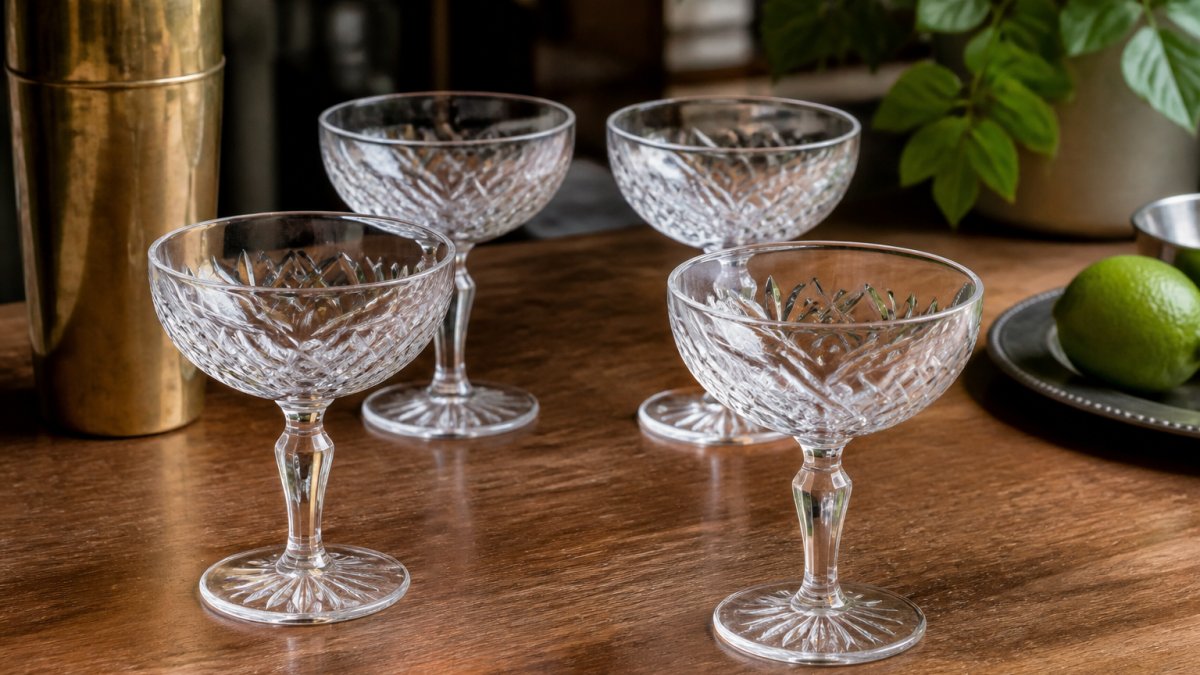
Table of Contents
- Why Vintage Crystal Coupes Make a Statement
- How to Identify Vintage Crystal Glassware
- Condition Grading: What to Look For Before You Buy
- Vintage Coupe Glasses Set of 4: Size, Capacity, and Configuration
- Where to Buy Vintage Barware Online
- Price, Value, and What You're Actually Paying For
- Shipping, Returns, and Protecting Your Purchase
- Common Mistakes to Avoid When Buying Vintage Crystal
- Frequently Asked Questions
Last Updated: October 16, 2026
Why Vintage Crystal Coupes Make a Statement
Vintage crystal coupes aren't just glassware, they're conversation starters. At Tipsyish, we've curated vintage coupe glasses because entertaining should feel effortless and meaningful.

These delicate stemmed glasses elevate everything from champagne toasts to mocktail moments. The weight in your hand, the etched floral patterns catching light, the sculptural stem, these details signal thought, even for casual hosting.
But not all vintage crystal coupes are created equal. Condition varies wildly, styles span decades, and prices range from reasonable to collector-level.
How to Identify Vintage Crystal Glassware
Identifying authentic vintage crystal requires attention to details manufacturers didn't always make obvious. Weight, marks, and design era tell you what you're buying and whether the price makes sense.
Weight and Feel
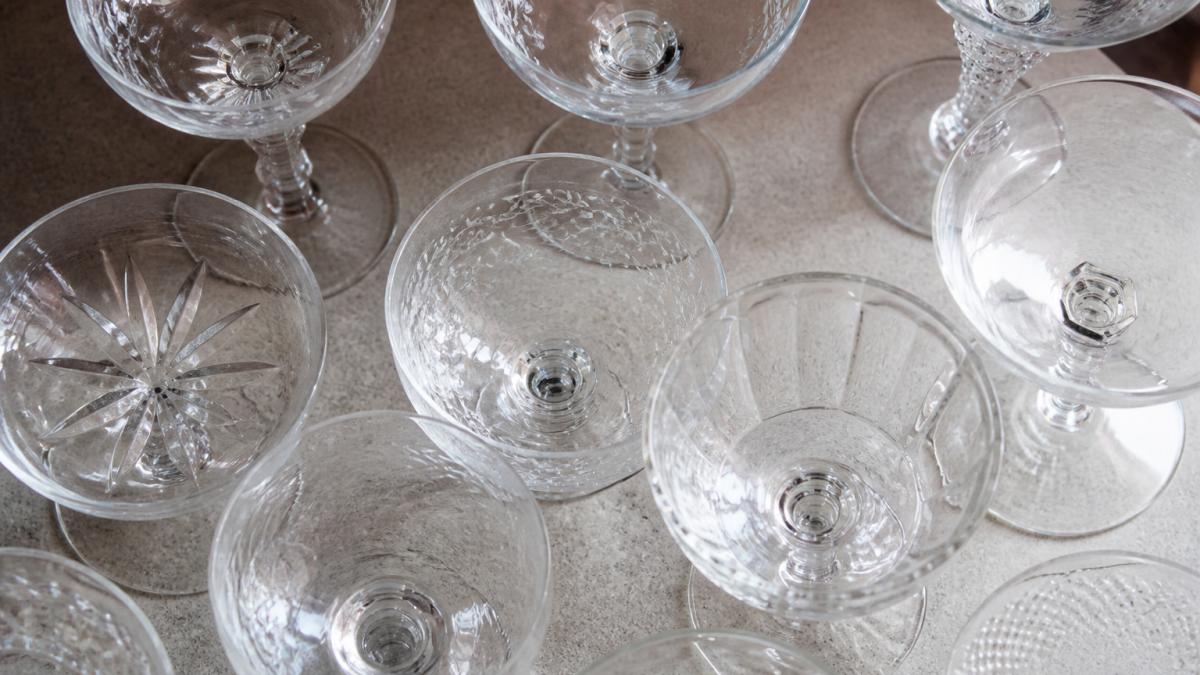
Real crystal is noticeably heavier than standard glass. A vintage crystal coupe should feel substantial, not light. That weight comes from lead content; older pieces often contain 24% lead or higher, creating distinctive heft and brilliant clarity.
Run your finger along the rim: vintage crystal coupes often have a slightly thicker, smoother edge than modern glass. The bowl should feel smooth and cool, without rough spots or seams.
Maker's Marks and Signatures
Look at the base and the underside of the stem. Most vintage coupe glasses carry etched or embossed marks identifying the manufacturer, your roadmap to authenticity and age.
The mark might be subtle, sometimes just initials or a small logo. Some pieces have no mark at all, which doesn't mean they're not vintage crystal, but it makes dating and valuation harder.
Pattern, Era, and Design Details
Etched floral designs became popular in the 1950s and 1960s, Art Deco peaked in the 1920s-1930s, and simple designs without heavy ornamentation often signal 1940s-1950s production. The pattern narrows down era and sometimes maker.
Examine the stem closely. Hollow stems were common and add to their appeal. Opaline (milky white) stems with clear or smoked bowls indicate midcentury innovation, while solid stems with decorative cuts suggest earlier, more formal pieces.
Condition Grading: What to Look For Before You Buy
Condition drives value more than any other variable when you buy vintage crystal coupes online, and sellers describe it most loosely. "Great vintage condition" can mean anything. Grade the piece yourself against a fixed scale, then compare that grade to the asking price.
A Five-Point Inspection Sequence
Work through these steps in order, using bright raking light (a phone flashlight at a low angle beats overhead light) and a 10x jeweler's loupe or phone macro lens.
- Rim, all the way around. Run a fingernail slowly around the entire rim; a chip will catch the nail even when invisible. Pay special attention to the pour lip, which takes the most contact.
- Bowl interior and exterior. Look for scratches, scuffs, and cloudiness that doesn't wipe off. Cloudiness persisting after washing is usually etching damage from dishwasher detergent or mineral film, not dirt.
- Stem, especially the joint. Bowl-to-stem and stem-to-foot joints hide hairline cracks. Tilt the glass against the light and look for a faint line that doesn't move when you rotate it.
- Foot and base. Check the underside for chips, grinding marks, and the maker's mark. A foot that rocks on a flat surface usually means a chip or warp.
- Sound test. Flick the rim gently with a fingernail. Lead crystal rings with a sustained, bell-like tone. A dull thud can indicate a crack, a repair, or non-lead glass.
The Grading Scale
Use these five grades and expect the seller's language to map onto them:
- Mint, no chips, cracks, scratches, or cloudiness; original fire and clarity intact. Commands full retail.
- Excellent, no chips or cracks; only faint base wear or microscopic scratches under raking light. Typically 10-20% below mint.
- Very good, one or two tiny rim fleabites (under 1 mm), light base scratches, or mild cloudiness in the foot. Typically 25-40% below mint and still fully usable.
- Good / user grade, visible chips, a stable hairline crack, or noticeable cloudiness. Typically 50-70% below mint; buy only if you accept the flaw or plan to display it.
- Display only, large chips, unstable cracks, or prior repairs. A small fraction of mint and not safe for drinking.
How to Ask for Proof Before You Buy
A serious seller will not hesitate to provide:
- A close-up of the rim from at least two angles
- A close-up of the base showing the maker's mark, if any
- A backlit shot of the bowl and stem joints
- A photo next to a ruler or coin for scale
If a listing uses only wide, softly lit shots, or the seller deflects a request for close-ups, treat that as a condition red flag. On most marketplaces you have a limited window to open a claim, so photograph the piece the moment it arrives and compare it against the listing photos before you wash it.
Vintage Coupe Glasses Set of 4: Size, Capacity, and Configuration
When you buy vintage crystal coupes online as a set, you're typically looking at either a matched set from one manufacturer or a curated collection of complementary pieces.
Capacity matters for how you'll use them. Most vintage coupe glasses hold 4-6 ounces, smaller than modern cocktail glasses but perfect for champagne, sparkling wine, or dessert; some deeper bowls hold 7-8 ounces.
A matched set means all four pieces came from the same production run with identical patterns and marks.
Consider what you'll actually use them for. The Vintage Etched Coupe Glasses - Set of 2 Smoked Glass with Opaline Stems from Tipsyish offers that flexibility: two pieces with smoked bowls and creamy opaline stems, etched with delicate floral details.
Where to Buy Vintage Barware Online
Finding authentic vintage crystal coupes online requires knowing where to look and what to ask. Platforms offer different advantages and risks.
Auction sites attract serious collectors but require patience and competitive bidding. Estate sale platforms offer one-time finds but limited selection. Direct-from-maker retailers guarantee authenticity at higher price tags.
Prioritize sellers who provide multiple high-quality photos, detailed condition descriptions, clear maker identification, and transparent return policies. Avoid generic stock photos and vague descriptions.
Vintage Etched Coupe Glasses – Set of 2 Smoked Glass with Opaline Stems →
Price, Value, and What You're Actually Paying For
Vintage crystal coupe pricing looks random until you break it into four factors: maker, pattern desirability, condition grade, and set completeness. Price those separately and you can tell a fair listing from an aspirational one in about thirty seconds.
What Each Factor Is Worth
Maker. Unmarked midcentury coupes from anonymous producers are the entry point; named makers carry a premium that scales with collector demand.
Pattern. Cut patterns (deep, geometric, hand-cut facets) command more than pressed or lightly etched ones because the labor was higher and the look more distinctive.
Condition grade. Apply the grading scale directly to price.
Set completeness. Matched sets of four or six from the same production run carry a real premium over the sum of singles, because matching is the hard part.
Per-Piece vs. Per-Set Pricing
Always convert the listing to a per-piece number before comparing. A "set of 6 for $180" is $30 per glass; a "set of 2 for $95" is $47.50 per glass. Buyers anchor on the total, so per-piece math is where you find outliers. Also check whether shipping is included, on fragile glassware it can add $15-$40 to a set, flipping a good deal into a mediocre one.
A Quick Value Checklist
Before you commit, run these four questions:
- Is the maker identified, and is there a photo of the mark?
- What is the condition grade, and does the price reflect it?
- What is the per-piece cost including shipping?
- Can you find a comparable sold listing for the same maker and pattern in the last 90 days?
Answer all four and you're pricing from evidence; answer one or two and you're pricing from vibes.
Why Vintage Holds Value
Unlike trend-driven new barware, a well-made crystal coupe from a documented maker has a price floor because supply is fixed and the pattern is no longer produced. Not every vintage coupe appreciates, common patterns in user-grade condition stay cheap, but a mint, marked piece from a recognized maker is unlikely to become worthless. Buy the pattern you actually want to drink from, and resale tends to take care of itself.
Shipping, Returns, and Protecting Your Purchase
Shipping fragile vintage glassware requires care. Reputable sellers use sturdy boxes, multiple layers of bubble wrap, and sometimes custom padding.
Insurance is worth the cost when buying vintage crystal coupes online. Shipping damage happens, and you want recourse if a piece arrives broken.
When your package arrives, inspect each piece immediately for chips, cracks, and cloudiness. Photograph any damage and contact the seller within 48 hours.
Common Mistakes to Avoid When Buying Vintage Crystal
Ignoring condition in photos. A beautiful product photo can hide flaws.
Buying without knowing the maker. An unmarked piece isn't necessarily worthless, but it's harder to value and authenticate.
Overpaying for rarity. Rare doesn't always mean valuable.
Skipping the return policy. This is your safety net.
Using these pieces daily without care. Vintage crystal is durable but not indestructible.
Buying vintage crystal coupes online doesn't have to be intimidating.
Frequently Asked Questions
How can I tell if a coupe glass is vintage crystal?
Real vintage crystal feels noticeably heavier than modern glass and has a warmer, slightly yellowish or greenish tint rather than perfectly clear. Look for maker's marks on the base, hand-blown irregularities, and etched or floral patterns that suggest age. Vintage crystal often has a faint ring when tapped gently. Run your finger over the rim and seams, vintage pieces may have slight imperfections or smoothed edges from age and use, which modern reproductions typically avoid.
What should I check before buying vintage crystal coupes online?
Examine photos carefully for chips, cracks, or cloudiness in the bowl. Ask the seller about condition specifics and whether the glasses are sold as a set or individually. Confirm capacity (usually 4-6 ounces for coupes) and stem style. Check the return policy and shipping protection, reputable sellers offer breakage guarantees or easy returns. Verify that etched or decorative details are intact and not worn flat, which reduces value and visual appeal.
How much should I expect to spend on vintage crystal coupes?
Prices vary widely based on condition, rarity, and maker. A single vintage coupe in good condition typically ranges from $15-$40, while a set of two like our Vintage Etched Coupe Glasses with Opaline Stems starts at $30. Rare or highly collectible sets can cost $100-$300+. Higher prices reflect superior condition, known makers, or exceptional design. Don't assume expensive means better, focus on condition, authenticity, and whether the style matches your entertaining needs.
Are vintage crystal coupe glasses safe to drink from?
Yes, vintage crystal coupes are safe to use for beverages and desserts if they're in good condition with no chips, cracks, or deep scratches that could harbor bacteria. Hand-wash them gently rather than using the dishwasher, which can cause thermal shock and damage. Avoid sudden temperature changes, don't pour hot liquid into a cold glass. If you spot any damage during inspection, use the glasses for display or decoration instead. Vintage condition means minor surface wear is normal and doesn't affect safety.

Comments