
Vintage Barware vs Thrift Store Finds for Your Bar
Last Updated: November 2, 2026
Quick Summary
Vintage barware is chosen for its era, maker, materials and look, while thrift store finds are usually a bargain grab with unpredictable quality. Thrift pieces win on price, but a curated vintage piece costs more and comes with condition details and a known history. Check for cracks, rim chips and cloudiness before buying any vintage barware.
- Thrift glassware typically sells for $1.00-$4.00 per tumbler or stemmed glass, though pricing varies by store.
- Curated vintage pieces in the article range from $25.00 to $55.00 each.
- Run a fingernail around the rim, since it catches chips a fingertip misses.
- Check maker marks on the base, rim or lid, such as ELMAR or Irvinware stamps.
- Pass on cracks, leaking shakers, missing tongs and active rust; accept cosmetic scuffs.
Table of Contents
- Vintage Barware and Thrift Store Finds: How They Differ
- Price and Value: When Thrift Finds Beat Curated Vintage
- How to Identify Vintage Glassware and Barware
- Assessing Condition: Chips, Cloudiness and Wear
- Vintage Glassware Safety and Everyday Use
- Cleaning Vintage Barware Without Damage
- Your Next Step: Shop Tipsyish's Vetted Vintage Barware
- Frequently Asked Questions
Vintage Barware and Thrift Store Finds: How They Differ
Vintage barware and thrift store finds can look alike at first glance, but they serve different purposes for a home bar. The distinction usually comes down to intent. Vintage barware is chosen for its era, maker, materials and presence on the bar cart. Thrift store glassware is often a lucky grab: a mixed box of stemware, a single pitcher, a set missing two glasses.
We think the difference matters before you spend a dollar. A thrift store find is about the bargain. A vintage piece is about the story, the craftsmanship and the way it changes a table. Neither is wrong, but knowing which you are shopping for saves time and disappointment.
Thrift stores tend to be unpredictable. You might walk out with a sterling-look cocktail shaker or a set of 1970s highballs, or you might find nothing usable in an hour of searching.
Here is the practical split:
| Factor | Thrift Store Find | Curated Vintage Barware |
|---|---|---|
| Sourcing | Random, varies by visit | Selected pieces, consistent quality |
| Time to shop | Hours of searching | Browse in minutes |
| Condition check | Entirely on you | Described and photographed |
| Best for | Budget experiments, bulk glassware | Gifts, styling, a specific look |
Price and Value: When Thrift Finds Beat Curated Vintage
Thrift finds usually win on sticker price, but the comparison only makes sense once you separate three numbers: what you pay, what the piece is worth to you, and what it would cost to replace. Most shoppers conflate them, then feel either smug or cheated after the fact.
Start with the thrift floor. At most charity and independent thrift stores, single tumblers and stemmed glasses commonly land in the $1.00-$4.00 range, plain pitchers and mixing glasses around $3.00-$8.00, and complete bar sets or ice buckets with tongs anywhere from $5.00 to $20.00 depending on the store's pricing policy and how recognizable the brand is.
Curated vintage costs more than thrift finds.
Resale value is a separate question from retail price, and it is the one most thrifters get wrong. A piece is only worth what another buyer will pay for it in its actual condition, and common midcentury ice buckets and silver-tone shakers are not scarce, they were made in large numbers and many survive.
Use a simple decision rule before you pay:
- Buy at thrift when the piece is complete, unmarked flaws are cosmetic, and you would happily pay the curated price for it if you found it in better condition. You are trading time for money.
- Buy curated when you need a specific look, a gift deadline, or a piece whose maker and era are documented, and you do not want to spend three weekends hunting.
- Pass when the price is low but the piece is cracked, cloudy beyond rinsing, missing a lid or tongs, or has plating loss that will spread with use. A $3.00 cracked glass is not a bargain; it is a $3.00 piece of clutter.
- Negotiate at estate sales, flea markets, and some independent thrift shops when you are buying multiple pieces or a set with a known defect. Ask for a bundle price rather than arguing over a single item; sellers respond better to volume than to haggling.
Watch out: a low thrift price can disguise a piece that needs $15.00-$30.00 of replacement hardware (a missing shaker cap, a bent tong arm) or professional cleaning, at which point the curated price was the cheaper option all along. Add the fix-up cost before you decide you got a deal.
How to Identify Vintage Glassware and Barware
Identifying vintage barware starts with a few reliable clues. Look for maker marks, check the materials, and place the piece in an era by its shape and finish. Most pieces will not come with paperwork, so your eye and a careful inspection do the work.
Maker Marks, Materials and Era Clues
Maker marks are the fastest route to authenticity. The Elmar ice bucket, for example, carries the marking "ELMAR MFG. / LOS ANGELES, CALIF. / MADE IN U.S.A.", and the Irvinware piece bears an "Irvinware Made in U.S.A." mark on its underside. Check the base, the rim and any lid for stamped or embossed text. The Kraftware ice bucket is marked Kraftware N.Y.C. and carries an embossed leaping-deer logo.
Materials and finish tell you a lot too. Faux tortoiseshell, chrome and silver-tone metal, and heavy clear glass all point toward midcentury production. Be cautious when a listing or shelf tag says "vintage" but gives no era, maker or material.
Thrift Store Glassware Finds: What to Look For on the Shelf
In a thrift store, slow down and handle each piece. Turn glassware toward the light and look for bubbles, seams, or a thin line of mineral haze. Run a finger around the rim to feel for nicks. Pick up barware with metal parts and check whether the hardware moves freely.
Shape is a useful clue. Cocktail glasses with a wide bowl and a tapered stem, rocks glasses with a heavy base, and pitchers with a pronounced spout often suggest a mid-century design. Patterns such as etched stripes or colored bands can also help you narrow down the era.
Assessing Condition: Chips, Cloudiness and Wear
Condition decides whether a piece is worth keeping, and barware needs a more specific inspection than glassware alone. Work through the same sequence every time so you do not get distracted by a pretty pattern and miss a fatal flaw.
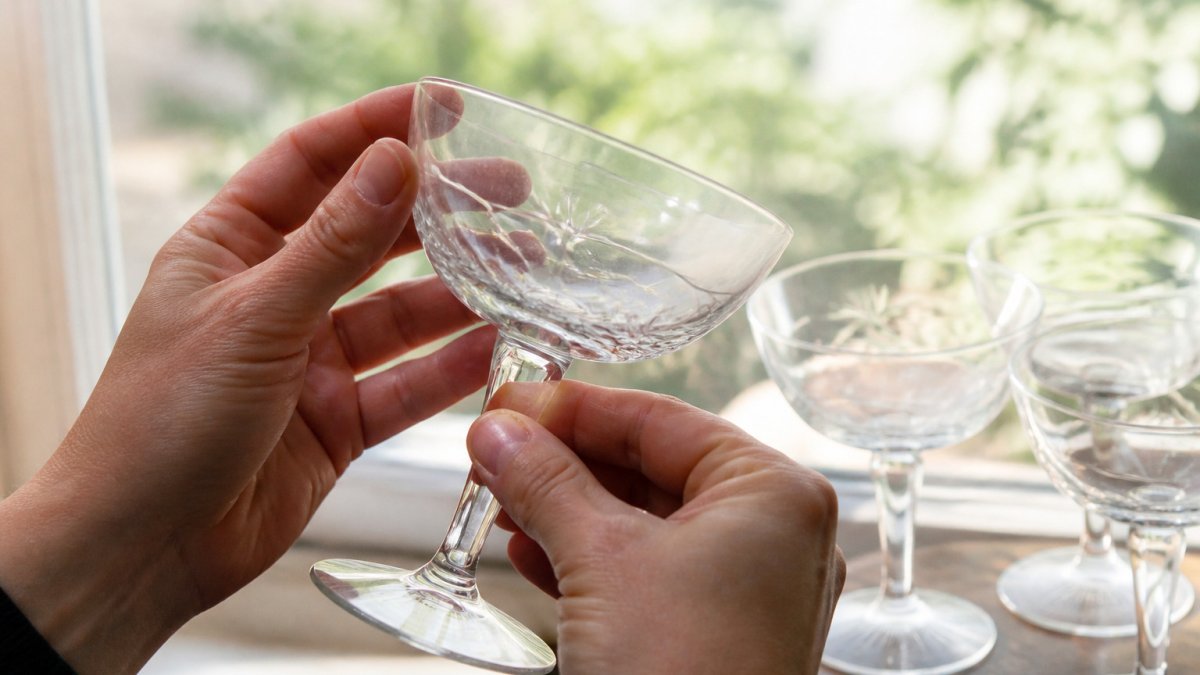
1. Rim and lip. Run a fingertip slowly around the entire rim, then repeat with a fingernail. A fingernail catches chips a fingertip glides over.
Vintage Elmar Faux Tortoiseshell Ice Bucket | Midcentury Barware →
2. Bowl and body. Hold the piece up to a window or overhead light and rotate it. Look for cracks (a bright, sharp line that catches light), deep scratches, and seeds or bubbles in the glass.
3. Stem and foot. For stemmed glassware, flex gently, very gently, and look for a hairline where the stem meets the bowl or foot.
4. Metal hardware and function. Barware lives or dies on whether it works.
5. Completeness. Sets are worth more than the sum of their parts, and missing pieces are the most common reason a thrift find disappoints.
6. Markings. Check the base, the rim, and the underside of lids for stamped or embossed text.
7. Wear that is normal versus wear that is a problem. The Elmar ice bucket listing notes scratches and finish wear on the silver-tone bands and handle, which is normal for a piece of its age.
A quick pass/fail summary you can run on the shelf: pass on cracks, rim chips, etched cloudiness, missing stoppers or tongs, leaking shakers, and active rust. Accept cosmetic scuffs, base chips, minor finish wear, and fine manufacturing bubbles.
Watch out: thrift-store lighting is designed to flatter, and fluorescent overheads hide cloudiness and fine scratches.
Vintage Glassware Safety and Everyday Use
Vintage barware is meant to be used, but not every piece is suited to daily service. Before you pour a drink into an older glass, check for cracks, deep scratches and cloudiness that does not rinse away. Any of these can harbor bacteria or weaken the glass.
Metal ice buckets need a bit of care. Keep the interior dry, and do not leave water sitting in the bottom for long periods. Be cautious with a cocktail shaker that has an unverified seal: our listing for the silver-tone shaker states that it has not been verified as watertight or suitable for preparing beverages, so it is best used as decor until you test it yourself.
Everyday usability also depends on weight and grip. A heavy, thick-walled rocks glass feels substantial at a dinner party but can be tiring to hold for a long evening. A lightweight stemmed glass may suit a cocktail hour better. Choose pieces that fit the way you actually entertain.
Cleaning Vintage Barware Without Damage
Gentle cleaning protects the finish and the glass. Wash by hand in warm, not hot, water with a mild dish soap. Avoid abrasive pads, which scratch glass and metal, and skip the dishwasher, since high heat and harsh detergent can cloud glass and fade plating.
For tough film, soak the piece briefly in a solution of warm water and white vinegar, then rinse thoroughly and dry with a soft cloth. Do not soak metal parts for long, and never soak a piece with visible plating loss.
Dry everything completely before storing. Trapped moisture is the main cause of spotting and tarnish on vintage metal.
Your Next Step: Shop Tipsyish's Vetted Vintage Barware
If you have worked through the checks above and want pieces that have already been screened, Tipsyish curates vintage barware and cocktail-inspired gifts. Our collection suits both hosts building a bar and gift-givers looking for something with a story. For a deeper look at spotting genuine pieces, read our guide to 5 Ways to Identify Authentic Vintage Barware, and when you are ready to browse, see where to buy authentic vintage glassware.
Among our current pieces, the Vintage Elmar Faux Tortoiseshell Ice Bucket | Midcentury Barware at $55.00 is a striking centerpiece for a midcentury bar cart, and the Vintage Irvinware Avocado Green Ice Bucket with Tongs | 1970s Barware at $40.00 includes a pair of vintage ice tongs. Both listings include condition notes and photographs. Need something for a gift? Check our vintage mixing glass sets buyer's guide to see which pieces suit a housewarming or wedding.


Frequently Asked Questions
What is the difference between vintage barware and thrift store glassware?
Vintage barware is pieces selected for age, maker, design and condition, usually from a curated seller who has checked them. Thrift store glassware is whatever a donor dropped off, mixed in with everyday dishes and sorted by volunteers who rarely have time to research makers or patterns. The price gap reflects that difference. A thrift find can be a bargain, but you carry the work of identifying it, checking it for damage and confirming it is worth keeping. Curated vintage costs more because that research has already been done for you.
How can you tell if glassware is genuinely vintage?
Start with maker marks on the base, look for a country of origin, and note the construction: mold seams, pontil marks, weight and the way the rim is finished all point to age. Pattern names and shapes can be matched against reference guides. Be cautious with pieces that look old but carry no marks at all, since reproductions are common. If a seller cannot tell you where a piece came from or how it was dated, treat the vintage claim as unconfirmed until you verify it yourself.
Is vintage glassware safe to drink from?
Most vintage barware is safe for drinks, but older glaze, decoration and metal finishes can contain lead or other materials you should not ingest. Avoid using pieces with painted or metallic decoration on the rim or inside the bowl for acidic drinks, and do not use cracked or chipped glass, since those can harbor bacteria and cut lips. Pieces meant for display only should be labeled that way. When in doubt, use the glass for decoration and reach for modern glassware at the table.
How should you clean vintage barware?
Hand wash in warm water with a mild dish soap and a soft cloth. Avoid abrasive pads, prolonged soaking and dishwashers, which can cloud glass, fade decoration and loosen silver-tone plating. For cloudiness, a mild vinegar soak for a few minutes can help, followed by a thorough rinse. Dry upright on a towel and avoid stacking pieces that could chip each other. Metal items such as ice buckets and shakers should be wiped dry promptly to prevent spotting.



Comments